
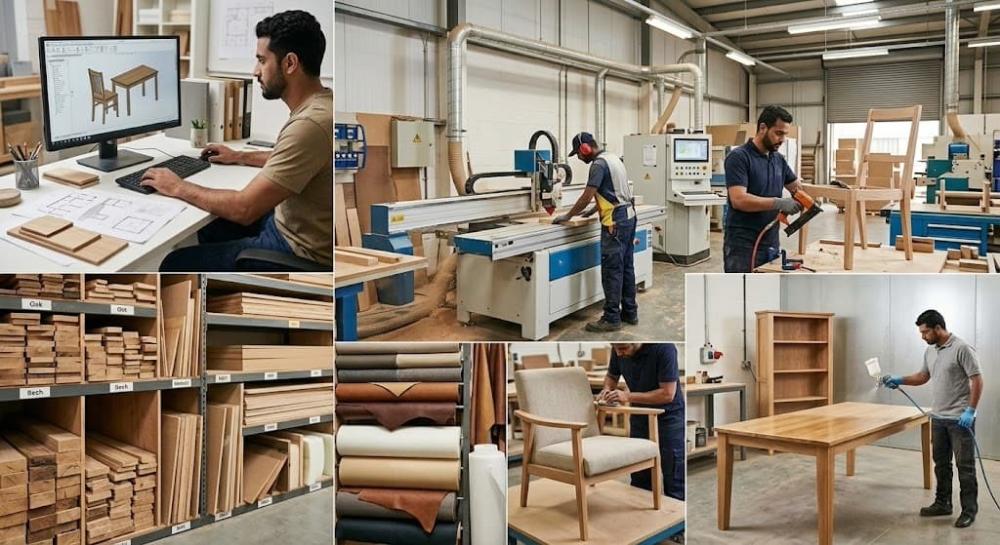
How to make furniture step by step, from design to final finishing
Furniture making is an industry that combines artistic precision with practical skill, as it relies not only on aesthetics but also aims to produce durable and functional pieces that meet the needs of daily use. With the evolution of designs and the emergence of diverse materials, furniture manufacturing methods have become more precise and sophisticated, both in traditional workshops and modern factories.
The furniture industry involves several key stages, beginning with the initial concept and design, followed by the selection of appropriate materials, and culminating in cutting, assembly, and final finishing. Each of these stages directly impacts the quality, appearance, and lifespan of the finished piece.
Design and planning in the furniture industry
The first step in furniture manufacturing is determining the type of piece to be made, such as a chair, table, cabinet, or sofa. Next, a suitable design is drawn, specifying the exact dimensions, overall shape, and intended use.
At this stage, many designers rely on modern software to create accurate, three-dimensional models, making it easier to modify details before manufacturing begins. The appropriate style for the piece is also selected—whether modern, classic, or simply practical—depending on the client's needs and the nature of the space where it will be placed.
Choosing the right materials for manufacturing
Next comes the material selection stage, which is one of the most important stages in furniture manufacturing. The materials used vary depending on the type of piece, the required budget, and the desired quality level.
Wood is one of the most commonly used materials, with beech, oak, and MDF being among the most popular types. The choice of wood depends on its durability and the desired appearance. Metals such as iron and aluminum are also used in some modern designs, particularly in contemporary or industrial furniture. Fabric and leather are essential components of upholstered furniture, such as sofas and chairs, while glass and plastic are used in some pieces to add an aesthetic touch or a more modern look.
Cutting and preparing according to measurements
After the design and materials are finalized, the raw material preparation phase begins. Wood, metal, or glass is cut according to the predetermined dimensions. Special tools and machinery are used to ensure accuracy, as even a small error in size could cause problems during assembly or in the final product.
Fabrics, leather, and foam pieces are also prepared if the piece needs upholstery. This stage requires great attention, as the precision of the cutting and preparation is the foundation upon which the rest of the manufacturing process is built.
Formation and assembly
After the pieces are prepared, the shaping stage begins, during which the materials are given their final form. In wooden furniture, this may include carving, engraving, smoothing, or preparing joints. In metal furniture, bending, welding, or pressing may be used to create the desired structure.
Then comes the assembly stage, where all the parts are put together. Screws, nails, adhesives, or special joints are used, depending on the material and design. In upholstered furniture, foam is added first, then the fabric or leather is tightly and neatly attached to ensure the product looks elegant and is comfortable.
Final finishing and quality control
Finishing is the stage that gives furniture its final appearance. Wooden furniture is sanded to remove roughness, then paint or varnish is applied to protect the surface and highlight the wood's beauty. Metal furniture may be coated with a rust-preventative layer or painted in a color that complements the design.
After finishing, the piece is carefully inspected to ensure its stability, quality of installation, and the integrity of all its parts. Final accessories such as handles, embellishments, or additional legs are also added at this stage.
Packaging and distribution
In the final stage, the furniture is wrapped in materials that protect it from scratches or breakage during transport. It is then prepared for distribution to stores, showrooms, or directly to customers. Some companies also offer assembly and delivery services, especially for large or complex pieces.
conclusion
Ultimately, furniture making is not a haphazard or random process; it's a comprehensive operation requiring planning, precision, and expertise at every stage. From design to material selection, from cutting to finishing, each step plays a crucial role in producing a piece of furniture that combines beauty, functionality, and durability. The more meticulously planned the manufacturing process, the stronger, better, and longer-lasting the final result.